We have all sat through that meeting.
The executive team gathers for an offsite retreat. The coffee is fresh, the whiteboards are clean, and the optimism is high. For two days, the team brainstorms ambitious goals: “Increase revenue by 20%,” “Become the market leader in customer satisfaction,” “Launch three new products.”
The team leaves energized. But six months later, nothing has changed. The “strategy” sits in a binder, ignored by the daily whirlwind of operations.
Why does this happen?
It happens because most organizations do not have a strategy. They have a wish list. They have confused ambition with design.
As an executive leader and strategist, I have spent my career operating at the intersection of law, business, and policy. In every sector—from regulating $800 million state systems to guiding financial mergers—I have seen that true leadership isn’t about setting loftier goals. It is about the disciplined application of diagnosis and choice.
This is the foundation of The Praxis Method™—moving beyond the “wish list” to engineer a path to success.
The Plague of “Bad Strategy”
Richard Rumelt, one of the godfathers of modern strategy, coined the term “Bad Strategy” to describe what passes for planning in most boardrooms. Bad Strategy is fluffy. It ignores the power of choice. It mistakes “working hard” for “working smart.”
But the most dangerous characteristic of Bad Strategy is the failure to face the challenge.
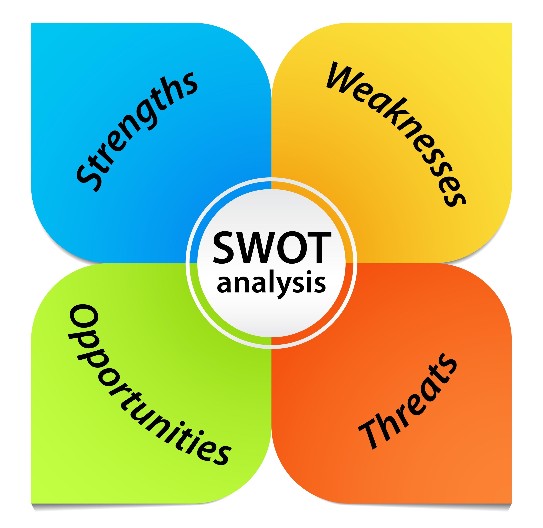
If you cannot define, with forensic precision, why you are not currently achieving your goals, you cannot fix it. Most SWOT analyses fail here. Leaders list “Strengths” and “Weaknesses” as a brainstorming exercise, but they never synthesize them into a diagnosis. They list “high turnover” as a weakness, but they don’t ask if that turnover is caused by poor culture (internal factor) or a shifting labor market (external factor).
Without a diagnosis, action is just spinning your wheels.
The Discipline of Diagnosis
The first step of The Praxis Method™ is The Forensic Diagnosis.
In my work as an Integrator, I start with “What do we want to achieve?” But most of my time is spent on the question, “What is the Crux of the problem?”
The Crux is the single, hidden challenge that, if resolved, unlocks the most value for an organization.
- Is the bottleneck legal? (A regulatory constraint preventing growth).
- Is it financial? (Capital allocation is misaligned with objectives).
- Is it structural? (The organization is designed to produce the wrong outcome).
Finding the Crux requires intellectual honesty. It requires a leader willing to say, “We are not growing because our product is no longer competitive,” rather than, “We need to push sales harder.”
The Hierarchy of Choice
Once the diagnosis is clear, organizations must make a decision. This is where the “Wish List” dies. Strategy is all about focus and choice. You cannot do everything.
I view strategy through a Hierarchy of Choice. Before we decide how to compete (Tactics), we must decide where we stand (Posture).
Level 1: Your Strategic Posture
Based on the diagnosis, an organization must adopt one of four archetypal postures. This is the synthesis of academic rigor and operational reality:
- Leverage Strength (Offense): You have a verified advantage. You press it to dominate.
- Shore Up Weakness (Defense): You have a critical flaw. You pause growth to fix the foundation.
- Neutralize the Adversary (Asymmetric): You cannot win head-to-head. You change the rules of the game.
- Adapt or Exit (Pivot): The environment has shifted. You must reinvent or retreat to survive.
Most leaders skip this step. They try to “Go on Offense” (growth goals) while they technically need to “Shore Up Weakness” (operational chaos). This misalignment is fatal.
Level 2: The Method of Competition
Only after the posture is set do we look at the specific method. This is where we apply the classic frameworks (like Michael Porter’s) to operations. Are we winning on Cost? On Differentiation? On Focus?
If your posture is “Offense” but your method is “Cost Leadership” in a market that values “Differentiation,” you will fail. Coherence is key.
From Theory to Coherent Action
The final output of a real strategy is Coherent Action.
A wish list is a set of disconnected initiatives: Marketing wants to rebrand, HR wants to hire more staff, Sales wants to discount prices. These actions often fight each other.
A Coherent Action Plan is different. In a coherent plan, every dollar spent, every person hired, and every policy written reinforces the others.
- If we are Differentiation Focused, we do not cut R&D budgets to save money.
- If we are Shoring Up Weakness, we do not launch a new product line this quarter.
As an Integrator, my role is to align the machinery of the organization—its legal frameworks, its financial incentives, and its operational cadence—so that the entire enterprise moves in one direction.
Conclusion: Don’t Hope. Engineer.
Hope is a virtue in life, but it is a liability in leadership.
Leading an organization through the complexities of the modern world requires more than optimism. It requires the courage to diagnose the brutal facts, the discipline to make hard choices, and the rigor to align action.
Whether I am serving on a board, stabilizing a state agency, or structuring a complex transaction, my approach remains the same. I don’t hope or guess. I engineer a path to success.
Dan Sung is a Strategic Architect and Executive Leader. He applies his proprietary Praxis Method™ to solve high-stakes challenges at the intersection of law, business, and policy.
 DAN SUNG
Leave a comment